
ZOHO
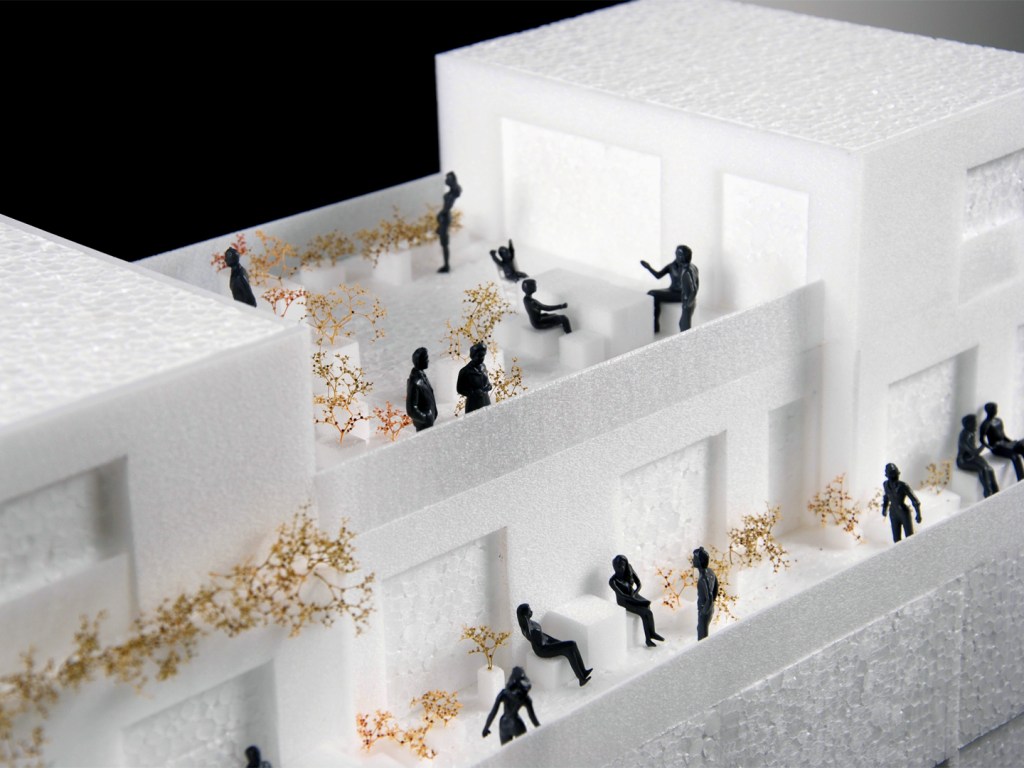
The redevelopment of the housing block on Almondestraat, designed by MORE Architecture, is a key component of the ZOHO inner-city transformation. Drawing inspiration from the neighborhood's industrial heritage and its ambitious green initiatives, the project envisions three distinct layers: Lab, Land, and Urban. While the massing of the design clearly defines these individual volumes, its purpose is to create inviting pockets and spaces between homes and propose new connections among apartments, layers and residents.
model created during a tenure at MORE Architecture. Ownership and leadership credited to the firm.

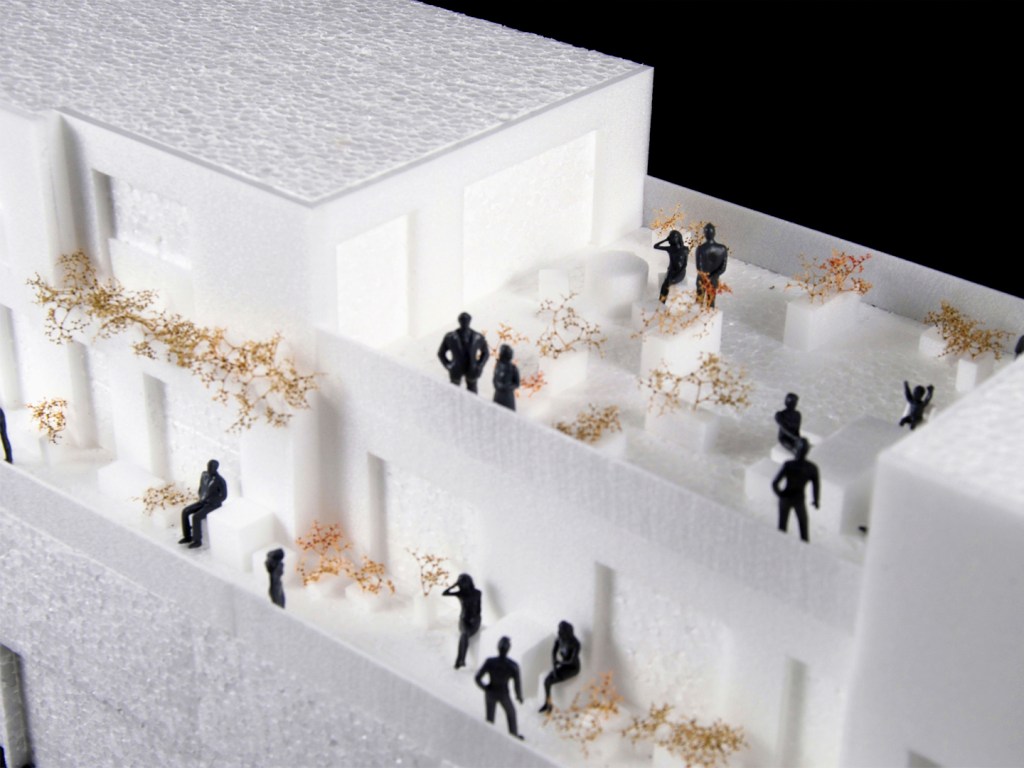
concept model | 1:50
materials: foamboard and EPS foam
client: MORE Architecture
architect: MORE Architecture
location: Amsterdam, 2020
The houses in the land layer are designed in such a way that they have an optimal relationship with the roof landscape through terraces and outdoor spaces – green living in the heart of the city.
Daan Roggeveen, MORE Architecture
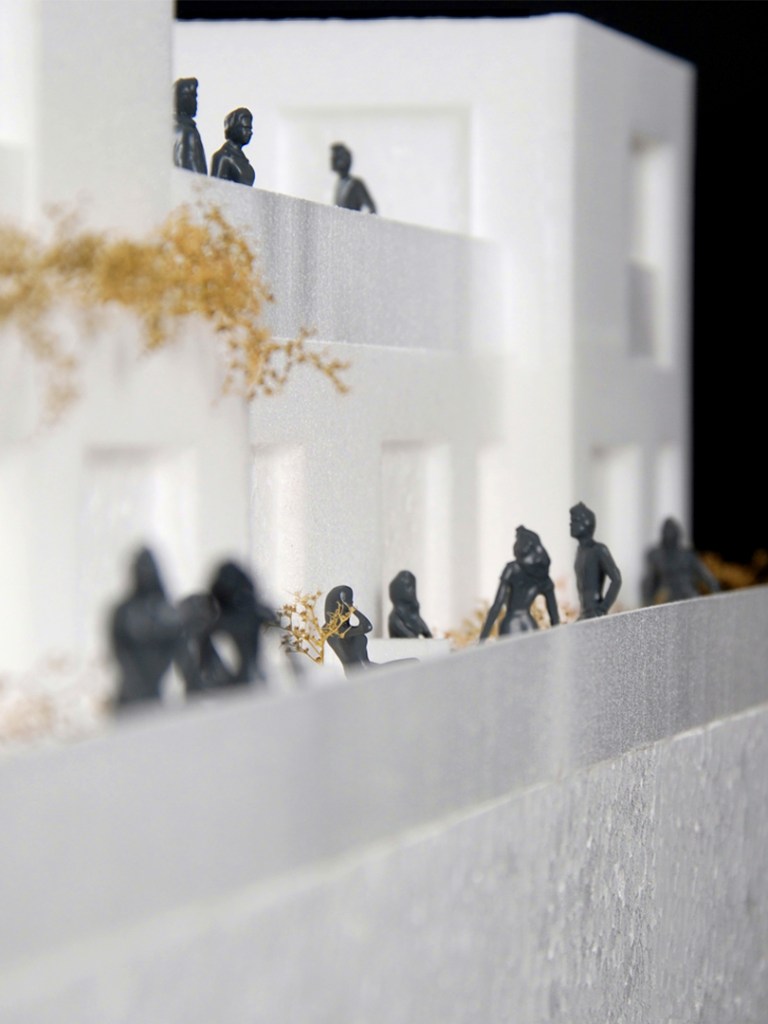
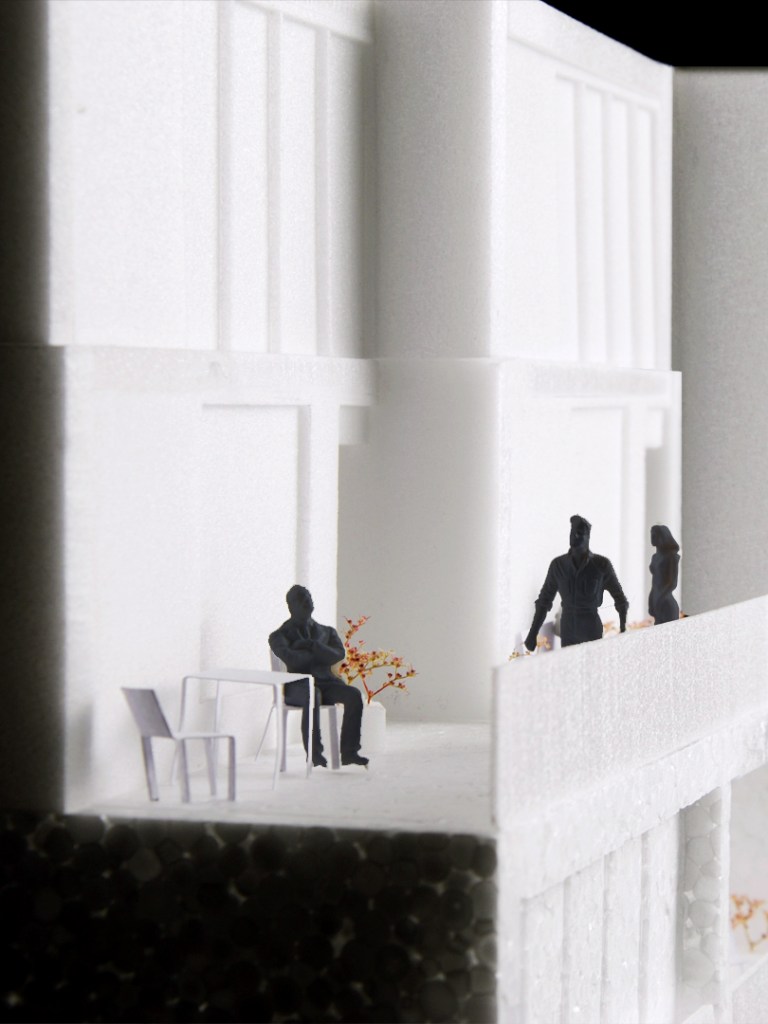
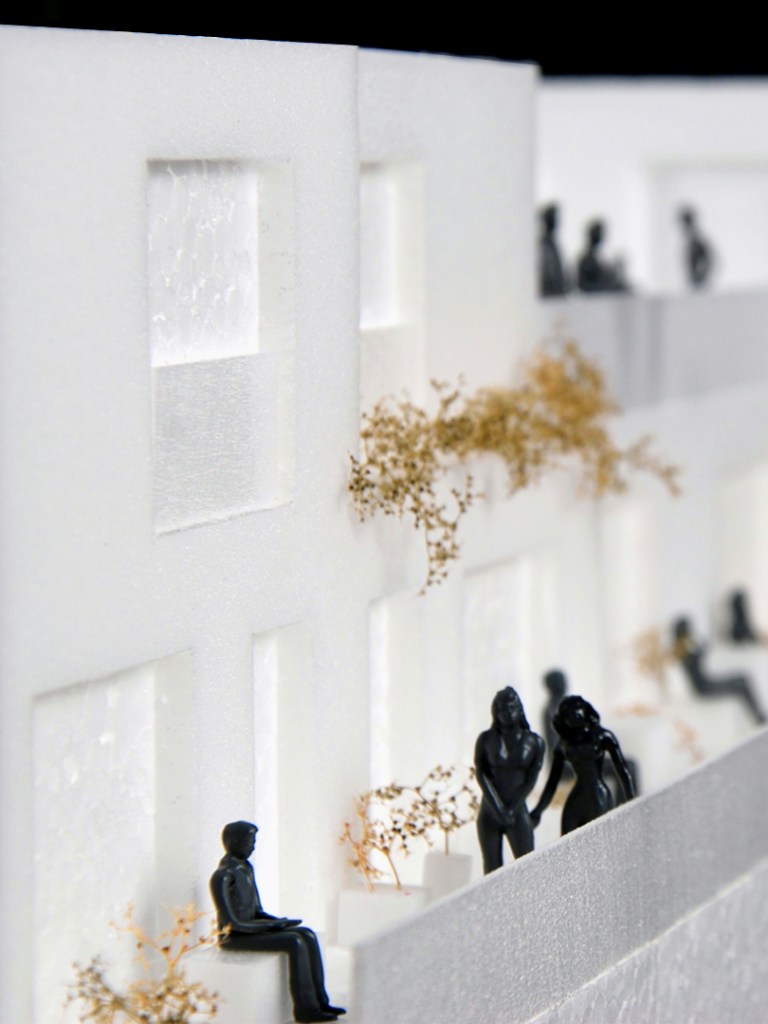
The housing block designed by MORE Architecture consists of six distinct typologies. On the plinth level they foster active interactions with the street, while on the upper 'Land' layer, terraces and exterior galleries allow both visual and physical connections between neighbors. This model highlights not only the architectural aspects of the design, but also the social possibilities and dynamics it proposes. By abstracting the volume and materialization, we emphasize the terraces and the 'elevated street' concepts, which are in the core of the project. The exaggeration of people and greenery is to clearly demonstrate how the design encourages informal interactions among residents, both on the terraces and within the exterior galleries.

Design and architecture create more than buildings, they envision new forms of urbanity and ways of living, particularly in established areas like the ZOHO neighborhood. Through model making, we can reflect and present these ideas, inviting viewers to engage with and interact with the proposed vision. In this case, we invite viewers to step into the role of a neighbor on Almodestraat, actively participating in the relationships and community interactions created by this design.
 STUDIO BASIC